Learn what the KWONG refund opportunity means, who may qualify, and how IAMPROSAY helps taxpayers prepare Form 843 before the July 10, 2026 deadline.
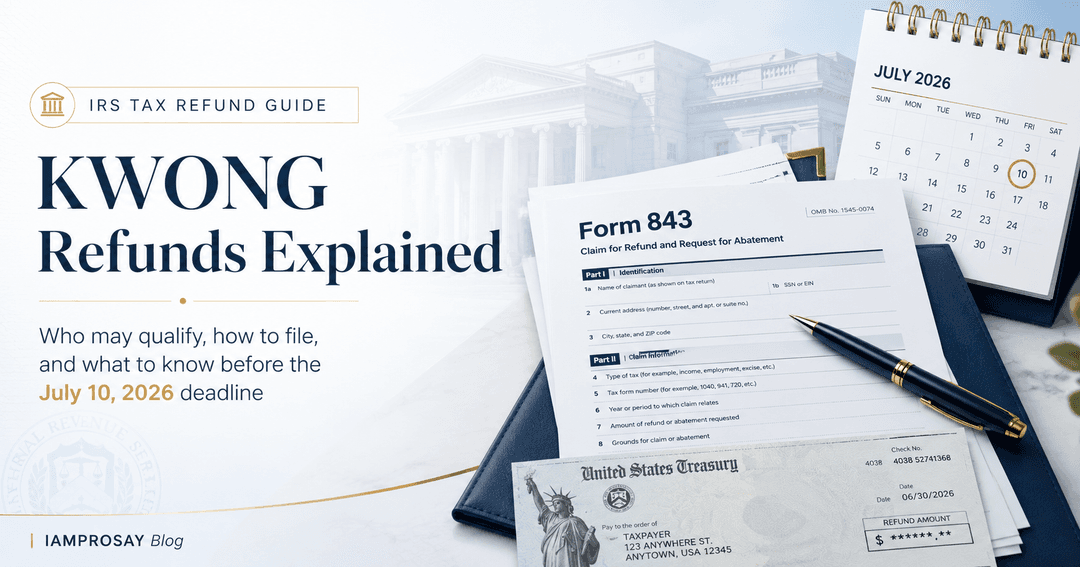
In April 2026, the IRS Taxpayer Advocate Service published a major update that could impact tens of millions of Americans who filed tax returns between 2020 and 2023.
According to the IRS Taxpayer Advocate, many taxpayers may now be eligible for significant refunds because of the Kwong decision, a federal court ruling that changes how certain penalties and interest may need to be calculated. The Taxpayer Advocate Service says tens of millions of taxpayers may be entitled to refunds or abatements of COVID-19 period penalties and interest, but relief will not be automatic. Most taxpayers must act by July 10, 2026.
This is one of the largest taxpayer refund opportunities in years, and the window to act is already open.
Source: IRS Taxpayer Advocate Service, “Tens of Millions of Taxpayers May Be Eligible for Significant Tax Refunds”
The Kwong case challenged how certain tax deadlines, penalties, and interest were treated during the COVID-19 federal disaster period.
As a result of the ruling, many taxpayers may have been charged penalties or interest that could now be eligible for refund or abatement.
The IRS Taxpayer Advocate states that:
“Tens of millions of taxpayers may be eligible for significant tax refunds.”
This is not a loophole. This is not a trick. This is a federal court decision that taxpayers may need to understand and act on.
You may qualify if you:
Even if you already paid your balance, you may still be owed a refund.
The IRS Taxpayer Advocate emphasizes that millions of taxpayers fall into these categories.
The IRS Taxpayer Advocate warns that many taxpayers may miss out because the process is not automatic.
Most taxpayers do not know they qualify. The IRS may not automatically issue refunds in most cases. Taxpayers generally need to file a claim to receive their money. The process can also be technical, confusing, and time-sensitive.
This means millions of people may miss out simply because they do not know what to do.
For many taxpayers, the deadline to file a KWONG refund claim is:
If you miss the deadline, you may lose the refund permanently.
The Taxpayer Advocate Service specifically warns that most taxpayers must file refund claims by July 10, 2026, to protect their rights.
To claim your refund, you may need to file:
This is where most taxpayers get stuck.
The IRS Taxpayer Advocate explains that most taxpayers will need to file claims using Form 843, and the form currently must be submitted on paper. The article also notes that taxpayers are generally advised to send claims by certified mail so they can prove timely submission.
The process can be:
That’s why IAMPROSAY built an automated KWONG tool.
IAMPROSAY generates:
You answer a few questions. IAMPROSAY handles the legal and technical language.
This helps ensure:
Most importantly, it helps you avoid missing a refund you may be legally entitled to claim.
The IRS Taxpayer Advocate’s article confirms what tax professionals have been warning:
If you paid penalties or interest between 2020 and 2023, you may be owed money, and IAMPROSAY can help you claim it.
The Kwong decision is one of the most significant taxpayer relief opportunities in years. But like most IRS-related issues, the burden may fall on taxpayers to take action.
IAMPROSAY makes the process simple, fast, and accurate, so you do not leave money on the table.
This is a complex and evolving legal issue. Taxpayers should review their individual circumstances and consider professional guidance where appropriate. The Taxpayer Advocate Service also notes that the issue may continue through further legal developments.